Mathematical Models Suggest Brain Time Cells May Be Innate Rather Than Learned
A University of Michigan study uses artificial neural networks to explore how neural time-tracking signals emerge.

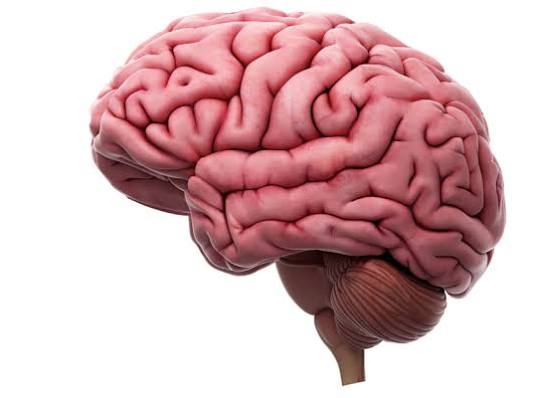
Neural time cells that track intervals inside the brain may represent an innate internal architecture rather than an ability acquired through learning, according to research led by Xin Luo at the University of Michigan.
The findings address an enduring question in neuroscience over how the brain generates sequentially timed signals across intervals. Because observing these internal mechanisms directly in living tissue is exceedingly difficult, the researchers relied on mathematical models and artificial neural networks to examine how such tracking signals form.
Testing involved an artificial agent trained through trial and reward to identify the longest three consecutive signals. A network configured with mathematically suitable initial parameters spontaneously generated ordered sequences of time cells before undergoing any training. By contrast, a network with randomized initial settings failed to produce structured signals even after extensive training. When the operational pause in the task was extended by more than three times without retraining, the time sequences stretched and adapted, keeping their internal indicators comparatively stable with twelve times less variation than standard networks.
قد تعكس الخلايا الزمنية والإشارات الزمنية الأخرى بنية مسبقة التحديد، لا يساهم التعليم إلا في تحسينها
The hypothesis that temporal processing may not depend on sensory experience recently drew additional backing from brain organoid experiments, which produced regular pulse sequences without external stimuli. A quote in the Arabic reporting notes: «قد تعكس الخلايا الزمنية والإشارات الزمنية الأخرى بنية مسبقة التحديد، لا يساهم التعليم إلا في تحسينها».
Researchers caution that whether time cells are decisively an innate brain structure remains an open question, as current conclusions rely on mathematical models rather than direct, conclusive proof from living neural tissue.
Jo24 reported the findings.